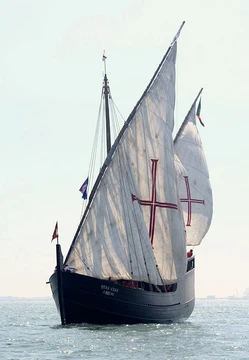
Caravel
A small, fast, windward-sailing ship of Iberian exploration.

Farid mernissi · CC BY-SA 4.0
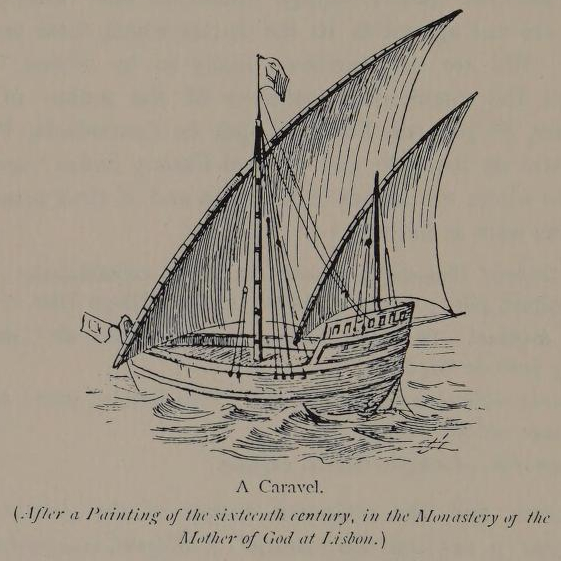
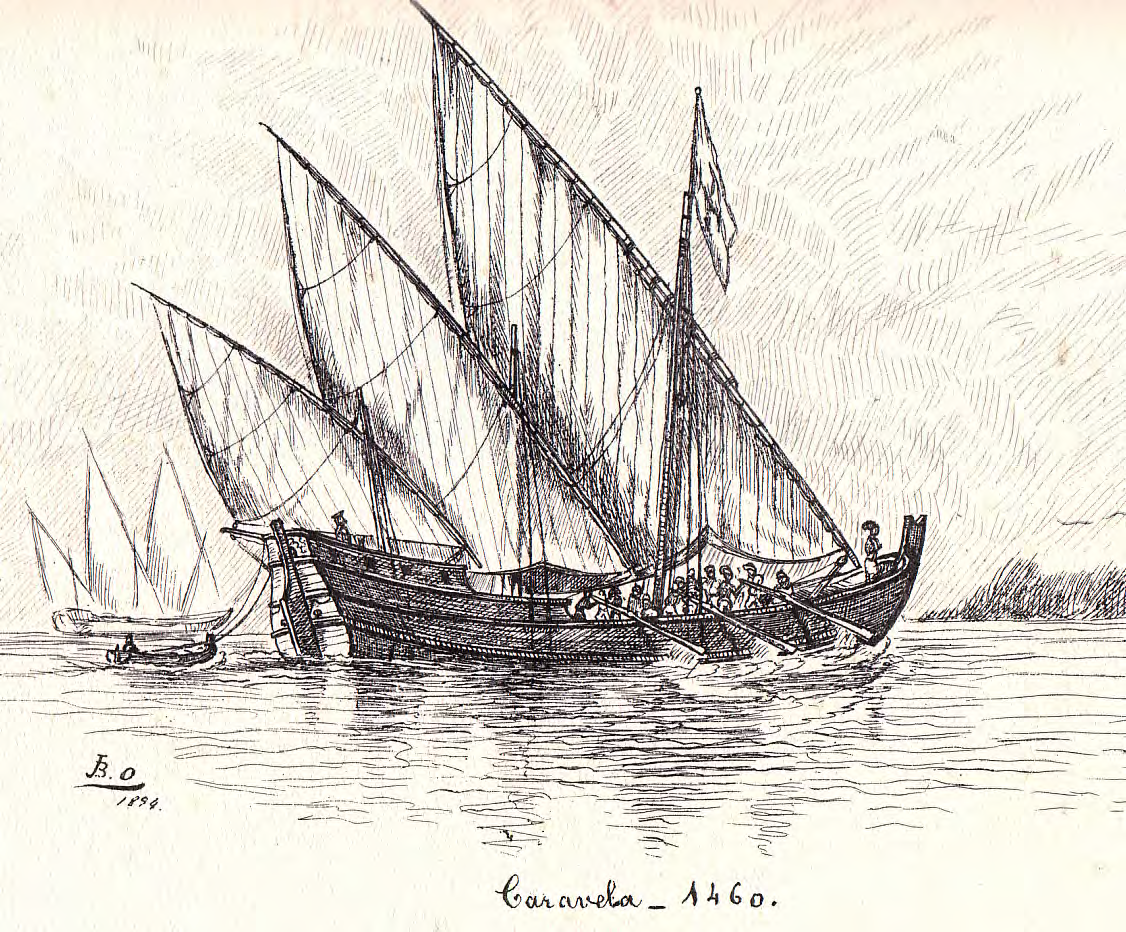
The caravel was a small sailing ship that developed from the fishing craft of Galicia, Portugal, and Atlantic Andalusia. It could be rigged entirely with lateen sails or with a combination of lateen and square sails, and was noted for its capacity for sailing windward and for its remarkable speed. Caravels were used by the Portuguese and the Spanish for voyages of exploration during the 15th and 16th centuries, in the Age of Exploration.
- final_recorded_usage
- 16th to early 17th century (decline in common usage)
Lore & Background
The caravel is a poorly understood type of vessel, with limited archaeological information. Its name derives from the Portuguese caravela, which descends from the Late Latin carăbus (wicker vessel) and the Byzantine Greek κάραβος (light ship). Some historians propose a parallel origin via the Arabic qārib. The earliest documented usage of the word in Portuguese records occurs in 1255, while the designation was applied to varying hull types over a multi-century period, with most historical accounts placing the caravel's decline in the 16th or early 17th century.
The origins of the caravel lie in the Mediterranean during Roman times, with the lateen sail developing during Roman times and becoming common by the 5th century. The design of the caravel developed from traditional small, single-masted fishing vessels used in the thirteenth century along the coasts of Galicia, Portugal, and Atlantic Andalusia. These early craft originated when Mediterranean trade networks carried lateen rigging westward through the Strait of Gibraltar, where regional shipwrights merged it with Atlantic boatbuilding practices.
Initially weighing less than 20 tons and sailed by a five-man crew, these open fishing vessels grew larger throughout the fourteenth century. Historical records from 1307 note caravels of up to 30 tons in Biscay, and by the early fifteenth century, the updated decked versions were widely used across the Iberian Peninsula. In the mid-to-late fifteenth century, Prince Henry the Navigator of Portugal needed better ships to explore the Atlantic ocean and the African coast, leading to the caravel's optimization.
Reader's Guide
The caravel was an important step in Iberian shipbuilding from 1400 to 1600. Its design allowed it to sail in difficult winds and open ocean conditions, making it the main vessel used by Portuguese explorers like Diogo Cão, Bartolomeu Dias, and the Corte-Real brothers, and in Spanish expeditions by Christopher Columbus. Caravels were easier to steer and handle than older designs like the barca and barinel. These explorations helped establish global trade networks and enabled the spice trade for Portugal and Spain.
However, the caravel's small size made it a poor cargo ship, and it was eventually replaced on commercial trade routes by the much larger carrack (carraca or nao). In the decades after the Americas were colonized, caravels fell out of use as newer designs appeared, replaced by the galleon (galeón), which combined the design of the nao and carrack but was stronger, could carry more weight, and was easier to maneuver.
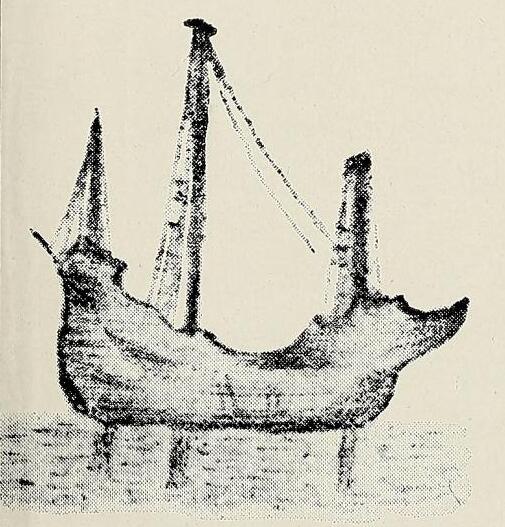
The earliest caravels in the thirteenth century were small and are believed to have been un-decked, carrying one mast with lateen sails, while later types were larger and had two or three masts and decks. Caravels such as the caravela tilhlda of the 15th century had an average length of between 12 and 18 m, an average capacity of 50 to 60 tons, a high length-to-beam ratio of around 3.5 to 1, and narrow ellipsoidal frame, making them very fast and maneuverable but with a limited cargo capacity. Towards the end of the 15th century, the Portuguese developed a larger version, the 'round caravel' (caravela redonda), with a square-rigged foremast and three other masts bearing lateen rig.
Did You Know?
- The English name caravel derives from the Portuguese caravela, which descends from the Late Latin carăbus (wicker vessel) and the Byzantine Greek κάραβος (light ship).
- The earliest documented usage of the word in Portuguese records occurs in 1255, while the caravel's common usage declined by the 16th or early 17th century.
- The caravel is a poorly understood type of vessel; we have a better understanding of the ships of the Greeks and Romans of classical antiquity than we do of the caravel.
- The Niña was re-rigged by Columbus with square rig at the Canary Islands before the first voyage, to give better performance on the Atlantic crossing – most of which was following favourable winds, for which lateen was l
From Mediterranean Shallows to Atlantic Swells
The caravel did not appear fully formed; it emerged from centuries of incremental maritime adaptation. Its roots stretch to Roman-era Mediterranean waters, where the lateen sail first graced small merchant vessels in the second century. By the fifth century, shipwrights across the basin were simplifying the older square rig to cut costs, and the lateen—fewer parts, lower maintenance—stepped in to fill the gap. This rigging shift ran parallel to a structural revolution: labor-intensive shell-first planking gave way to the more economical frame-first carvel method. When Muslim conquests swept through North Africa, Iberia, and the Byzantine Exarchate, existing shipyards and crews simply carried the tradition forward under new political banners. The real transformation for the caravel came in the thirteenth century, when Mediterranean trade routes pushed lateen rigging westward through the Strait of Gibraltar. There, Galician, Portuguese, and Andalusian boatbuilders grafted the triangular sail onto small, shallow-draft fishing boats built to survive rough Atlantic swells and treacherous river mouths. What began as open craft under twenty tons, crewed by just five men, grew steadily larger through the fourteenth century, reaching thirty tons by 1307 in Biscay, and by the early 1400s the decked versions had become a staple across the Iberian coast.
Sails of the Age of Discovery
In the mid-to-late fifteenth century, Prince Henry the Navigator of Portugal recognized that the square-rigged barca and rowing galleys of the previous era could not meet the demands of open-ocean exploration along the African coast. At Sagres, he assembled a circle of specialists in mapmaking, navigation, astronomy, and ship design with a single mission: build a vessel capable of handling the open sea. The caravel was the answer. Its lateen rig—whether fully lateen or a hybrid of lateen and square sails—gave it an extraordinary ability to beat windward, a critical advantage when navigating the shifting winds of the Atlantic and the African shoreline. Its remarkable speed and agility in difficult conditions made it the preferred platform for the great Portuguese voyages of the fifteenth and sixteenth centuries. Explorers such as Diogo Cão, Bartolomeu Dias, and the Corte-Real brothers all relied on caravels to push beyond the known world. The Spanish adopted the type as well, deploying it in their own exploratory campaigns. Alongside the heavier nao, which evolved from the older cog, the caravel fundamentally restructured what European maritime reach could be, turning the Atlantic from a barrier into a highway.
A Name Carried Across Seas and Centuries
The word caravel in English is borrowed from Portuguese caravela, but the linguistic trail runs far deeper. The term descends from Late Latin carăbus, meaning a wicker vessel, which in turn traces back to Byzantine Greek kárabos, a light ship. This same root produced the Medieval Spanish cárabo, a small Mediterranean sailing craft, and the modern Greek karávi, still meaning ship today. The continuity of the word mirrors a documented continuity of carvel-planking construction practices that stretched across the entire Mediterranean basin for centuries. Some historians, however, propose a parallel origin through the Arabic qārib, a small boat, reflecting the deep maritime exchange between Christian and Islamic shipbuilding cultures. The earliest surviving Portuguese record using the term dates to 1255, while the last entries in printed maritime logs appear in 1766. That five-century span reveals that caravel was never a single fixed design; the designation was applied to a shifting family of hull types across generations, making the word itself a small archive of changing seafaring practice.
A Vessel Shrouded in Mystery
For a ship that reshaped the modern world, the caravel remains one of the least well-documented vessel types in maritime history. Scholars today understand the warships and merchantmen of classical Greece and Rome in far greater detail than they understand the very craft that carried the great age of exploration. A handful of archaeologically investigated wrecks are believed to be caravels, but the overall picture is fragmentary. The earliest excavated ship reconstructed with a lateen rig, Yassi Ada II, dates to roughly 400 AD, and four more predate the Arab advance. Visual evidence is equally sparse: a late-fifth- or early-sixth-century mosaic from Kelenderis, an early-seventh-century graffito at Kellia, and a recent find from the Yenikapı excavations offer glimpses of rigging arrangements, while an eleventh-century glazed pottery dish from Saracenic Dénia stands as the earliest securely identifiable depiction of a sailing rig in the Islamic world. Unequivocal images of masts and sails are rare in early Islamic art, leaving historians to piece together the caravel's true form from scattered fragments, ambiguous illustrations, and the wide gaps between what is known and what is lost.
Gallery
Frequently Asked Questions
What is a Caravel?
The caravel was a small, fast sailing vessel that evolved from the fishing boats of Galicia, Portugal, and Atlantic Andalusia. It went on to become one of the signature ships of the Iberian Age of Exploration.
What made the Caravel different from other ships of its time?
Its lateen-sail rigging—sometimes combined with square sails—gave it outstanding ability to sail close to the wind, and it was remarkably fast for its size. That windward agility let crews navigate coastal routes and open-ocean passages that heavier vessels simply could not handle.
Who sailed Caravels and for what purpose?
Portuguese and Spanish navigators employed caravels as their primary exploration vessels throughout the 15th and 16th centuries. They carried crews along the West African coast, around the Cape, and across the Atlantic in search of new trade routes and territories.
When did the Caravel fall out of common use?
Its widespread use declined from the 16th century into the early 17th century. Larger, more heavily armed ships gradually took over the roles that caravels had filled in both exploration and commerce.
Why is the Caravel important to Portuguese history?
It gave a relatively small Iberian kingdom the technological edge to project maritime power across oceans that would otherwise have been out of reach. Without its speed and windward capability, the scale and pace of Portuguese oceanic exploration would have been far more limited.
More in Portuguese inventions 1-18
Spotted an error? Know more?
This is a living reference — every entry is fact-audited, and reader corrections feed straight into our audit queue. Suggest an edit · See this site's audit record