
Eslicarbazepine acetate
Anticonvulsant prodrug for partial-onset seizures.

Anypodetos · Public domain
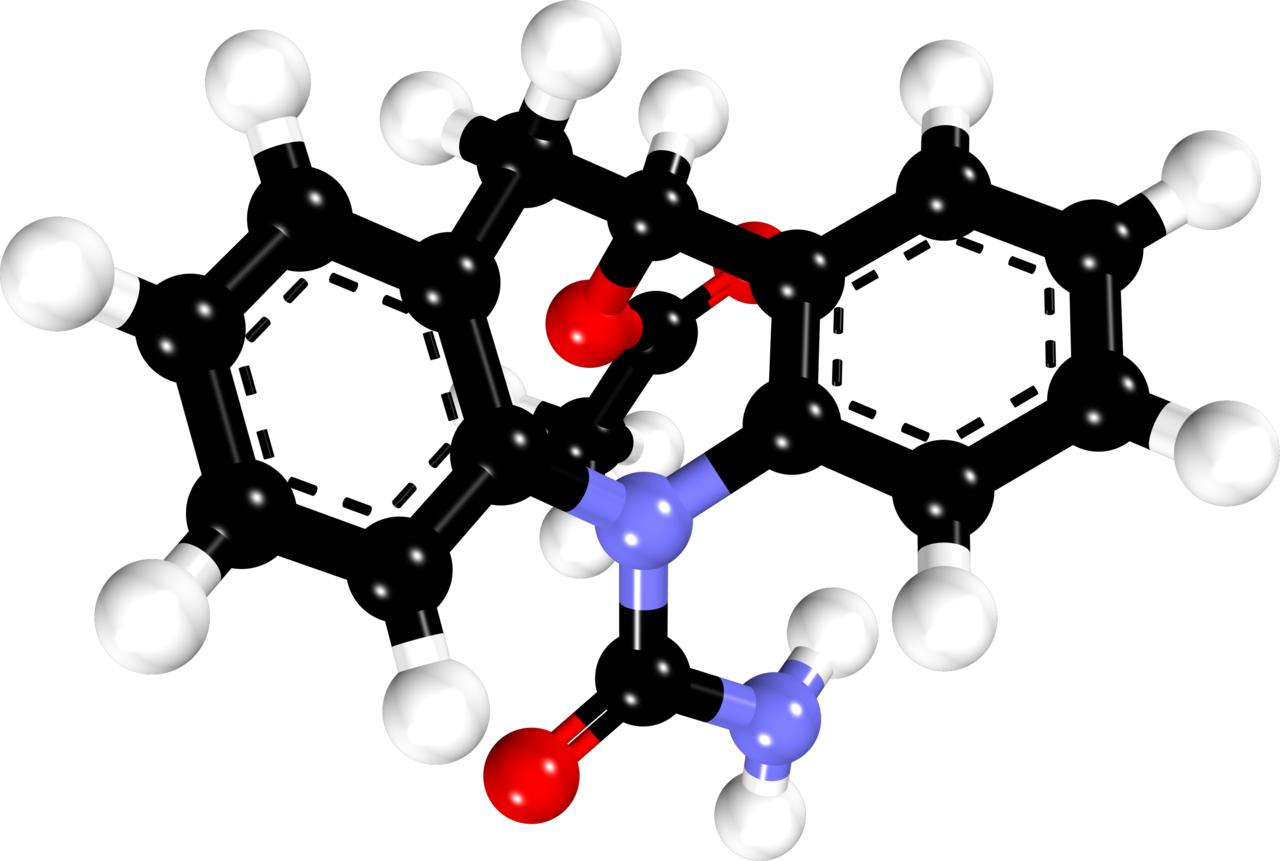
Eslicarbazepine acetate (ESL) is an anticonvulsant medication sold under the brand names Aptiom and Zebinix among others. It is approved for use in Europe and the United States as monotherapy or as additional therapy for partial-onset seizures epilepsy. Developed by the Portuguese pharmaceutical company Bial, it acts as a prodrug to (S)-(+)-licarbazepine, with a mechanism of action identical to that of oxcarbazepine.
- field
- Anticonvulsant medication
- known_for
- Treatment of partial-onset seizures epilepsy
- brand_names
- Aptiom, Zebinix, Exalief
- developer
- Bial (Portugal)
- approval_regions
- European Union (2009), United States (2013)
Lore & Background
Eslicarbazepine acetate was developed by the Portuguese pharmaceutical company Bial. In early 2009, Bial sold the marketing rights in Europe to the Japanese company Eisai. The drug was approved in the European Union in April 2009 under the trade names Zebinix and Exalief, but was marketed only under the first name. In the US it is marketed by Sunovion (formerly Sepracor) and was approved in November 2013. The medication's primary US patents are projected to expire in May 2025, at which point generic versions are expected to become available, potentially lowering the all-discounted retail cost from thousands of dollars to as little as $67.25 for the consumer.
Reader's Guide
Eslicarbazepine acetate is significant as a treatment for partial-onset seizures, offering an alternative to related anticonvulsants like oxcarbazepine and carbamazepine. Its mechanism involves stabilizing the inactive state of voltage-gated sodium channels, though some sources note this has not been shown conclusively. The drug's pharmacokinetics show rapid absorption and conversion to the active metabolite eslicarbazepine, with a half-life of 10 to 20 hours. Adverse effects are similar to oxcarbazepine, with common issues including tiredness, dizziness, and hyponatremia. Contraindications vary by region: the Austria-Codex lists second- or third-degree atrioventricular block as a contraindication, while the US FDA does not. The drug's interactions include reducing plasma levels of drugs metabolized by CYP3A4 and increasing levels of those metabolized by CYP2C19. Its legacy includes potential uses for trigeminal neuralgia and bipolar disorder, though a 2015 assessment showed no statistical difference to placebo for the latter. The expiration of US patents in 2025 made generic versions widely available, improving access.
Did You Know?
- Eslicarbazepine acetate is a prodrug to (S)-(+)-licarbazepine, with a mechanism identical to oxcarbazepine.
- The drug is contraindicated in people with second- or third-degree atrioventricular block in the Austria-Codex, but not by the US FDA.
- Common adverse effects in more than 10% of patients include tiredness and dizziness.
- The medication's primary US patents are projected to expire in May 2025, which could lower the retail cost to as little as $67.25.
Mechanism and Pharmacological Profile
Eslicarbazepine acetate functions as a prodrug, meaning the acetate ester form is rapidly converted in the body to its active component, eslicarbazepine (the S-enantiomer of licarbazepine). Once active, it works by stabilizing the resting, inactive conformation of voltage-gated sodium channels on neuronal membranes, thereby reducing the influx of sodium ions and making nerve cells less prone to firing. This mechanism mirrors that of oxcarbazepine and likely carbamazepine as well, though some sources note the exact mechanism has not been definitively confirmed. From a pharmacokinetic standpoint, the drug is absorbed at least 90 percent from the gastrointestinal tract regardless of whether food is present. Because the parent compound is so quickly metabolized, it is essentially undetectable in the bloodstream; instead, peak levels of eslicarbazepine appear roughly two to three hours after dosing. Plasma protein binding stays below 40 percent, the biological half-life ranges from ten to twenty hours, and steady-state concentrations are typically achieved within four to five days. Elimination is predominantly renal, with about two-thirds of excreted drug appearing as unchanged eslicarbazepine and one-third as its glucuronide conjugate.
Safety, Contraindications, and Genetic Risk
The adverse-effect profile of eslicarbazepine acetate closely parallels that of oxcarbazepine. The most frequently reported complaints, affecting more than ten percent of patients, are fatigue and dizziness. In the one-to-ten-percent range, clinicians observe impaired coordination, gastrointestinal upset including diarrhea, nausea, and vomiting, mild skin rashes, and hyponatremia—low blood sodium—seen in roughly 1.2 percent of users. An elevated risk of suicidal ideation is also noted. Regarding contraindications, hypersensitivity to eslicarbazepine, oxcarbazepine, or carbamazepine is a clear exclusion. The Austrian Codex additionally lists second- and third-degree atrioventricular heart block, a restriction the US FDA does not include. Overdose symptoms mirror therapeutic-dose side effects in amplified form, including severe hyponatremia, drowsiness, unsteady gait, one-sided weakness, and visual or gastrointestinal disturbances; no specific antidote exists, though dialysis can remove the drug and its metabolites. On the genetic front, certain HLA alleles—HLA-A*3101 (present in 2–5 percent of Europeans and about 10 percent of Japanese individuals) and HLA-B*1502 (predominant in Asian populations)—are linked to serious skin reactions such as Stevens–Johnson syndrome and DRESS syndrome in patients taking carbamazepine and structurally related agents, a risk that theoretically extends to eslicarbazepine.
Drug Interactions and Metabolic Considerations
Eslicarbazepine acetate shares the same interaction landscape as oxcarbazepine, largely because both funnel through similar hepatic enzyme pathways. The drug can lower the plasma concentrations of medications that depend on CYP3A4 for metabolism—this effect has been verified in studies involving simvastatin and the oral contraceptive combination of levonorgestrel and ethinylestradiol—and it also influences substrates of UDP-glucuronosyltransferase. Conversely, it can raise the levels of drugs processed by CYP2C19. Among anticonvulsants, carbamazepine reduces eslicarbazepine blood levels, likely by inducing glucuronidation, and the combination was associated with increased diplopia, impaired coordination, and dizziness in a clinical trial. Phenytoin similarly lowers eslicarbazepine concentrations, possibly through the same glucuronidation mechanism, while simultaneously raising its own serum levels, probably via CYP2C19 inhibition. In contrast, combination studies with lamotrigine, topiramate, valproic acid, and levetiracetam showed no clinically significant interactions, although a minor reduction in lamotrigine levels was observed with eslicarbazepine.
Development, Market Trajectory, and Emerging Research
The drug was originally developed by the Portuguese pharmaceutical company Bial. In early 2009, Bial transferred European marketing rights to the Japanese firm Eisai, and the medication received European Union approval that same April under the trade names Zebinix and Exalief, though only Zebinix entered the market. In the United States, Sunovion (formerly Sepracor) took on marketing and secured FDA approval in November 2013. For over a decade, the branded product carried a retail price in the thousands of dollars. That changed in May 2025, when the primary US patents expired and generic versions hit the shelves, dropping the all-discounted consumer price to as little as $67.25. This price shift is especially consequential because alternative studied indications such as trigeminal neuralgia were excluded from most US insurance coverage, owing to Bial and Sunovion never submitting those additional uses for FDA approval. Looking ahead, pediatric anticonvulsant trials were underway as of 2016, and the drug has been explored for trigeminal neuralgia and bipolar disorder; however, a 2015 assessment found no statistically significant difference from placebo for the latter condition.
Gallery



Frequently Asked Questions
What is Eslicarbazepine acetate?
It is an anticonvulsant drug created by the Portuguese pharmaceutical company Bial and sold under brand names such as Aptiom, Zebinix, and Exalief. In the body it functions as a prodrug that is converted into its active form, (S)-(+)-licarbazepine.
What condition does Eslicarbazepine acetate treat?
It is prescribed for partial-onset seizure epilepsy, either as a standalone therapy or layered on top of other anticonvulsant drugs. Its mechanism mirrors that of oxcarbazepine, helping to calm overactive neuronal firing.
Who developed Eslicarbazepine acetate?
The Portuguese pharma firm Bial is credited with developing this medication, making it a notable homegrown contribution to global epilepsy care from a smaller national company.
Where is Eslicarbazepine acetate approved for use?
It gained regulatory clearance in the European Union in 2009 and followed up with U.S. approval in 2013. Those two major markets cover the bulk of its clinical availability today.
Why is Eslicarbazepine acetate important in epilepsy treatment?
It gives clinicians and patients an additional prodrug option whose mechanism is well understood and comparable to oxcarbazepine. Its origin at a mid-size Portuguese company like Bial also shows how regional pharma firms can make a meaningful impact on worldwide medicine.
More in Portuguese inventions 1-18
Spotted an error? Know more?
This is a living reference — every entry is fact-audited, and reader corrections feed straight into our audit queue. Suggest an edit · See this site's audit record