
Via Verde
Portugal's first universal electronic toll collection system.

Bronstein · CC BY-SA 4.0
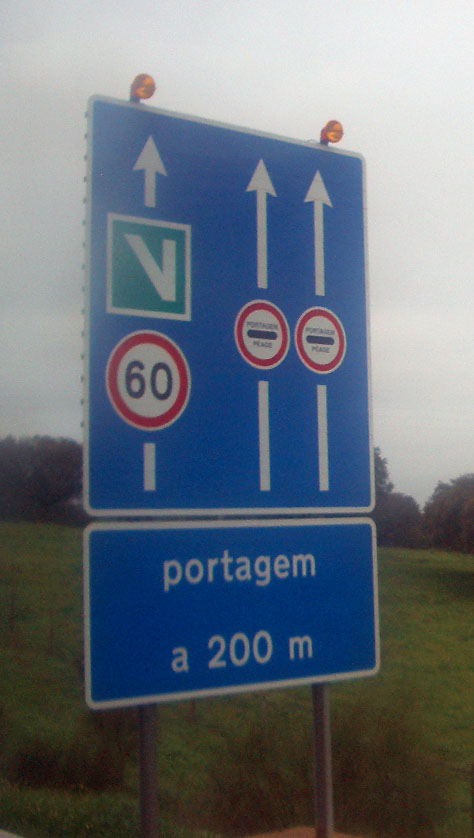
Via Verde (Portuguese for "Green Lane") is an electronic toll collection system that has been in operation in Portugal since April 1991. By 1995, it became available at every toll road and bridge in the country. The system works by using a DSRC tag attached to a vehicle's windshield; when the vehicle passes through a non-stop toll lane, the tag transmits its identifier, and the toll amount is automatically debited from the driver's bank account. Non-stop lanes on interchanges typically have speed limits of 40 or 60 km/h, while highway tolls between different tolling regions allow speeds up to 120 km/h, and the system has been proven to function at speeds above 200 km/h.
If an exception occurs—such as an invalid or missing tag, or a mismatch between the vehicle's class detected by lane sensors and the class encoded in the tag—the vehicle is photographed. If fraud is suspected, a legal procedure is initiated. Via Verde was the first system in the world to be universally applied to all tolls in a single country. Its widespread adoption in Portugal is largely due to its full integration with any bank through the SIBS network, also known as Multibanco.
Vehicle classes are defined by height and axle count. Class 1 covers vehicles with a height below 1.10 meters (measured over the front axle), with or without a trailer; motorcycles are class 1 for both manual tolls and when using Via Verde. Class 2 includes vehicles with two axles and a height of 1.10 meters or more. Class 3 has three axles and the same height requirement, and Class 4 includes vehicles with more than three axles. Some Class 2 cars may qualify for a class reduction if they are between 1100 mm and 1300 mm tall, have a maximum weight between 2300 kg and 3500 kg, can carry more than five passengers, and lack four-wheel drive. Eligibility is determined either by a pre-approved list or a special inspection.
Beyond tolls, Via Verde has expanded to other uses. Many car parks, some GALP gas stations, and even a McDonald's drive-thru in Lisbon (as of 2015) accept it as a payment method. It is also commonly used at parking centres, notably at Lisbon Airport. The system is fully integrated, so a single tag works everywhere. Since 2010, some highways have switched to electronic-only tolling, with no manual cash or credit card payment possible; these highways are marked by an icon showing a car under curve
- field
- Electronic toll collection
- nationality
- Portuguese
- known_for
- First universally applied electronic toll system in a country
- introduced
- April 1991
- full_coverage
- 1995
Lore & Background
Beyond tolls, Via Verde has expanded to other uses, including carparks, some GALP gas stations, and a McDonald's location in Lisbon (as of 2015). It is commonly accepted in parking centers, notably at Lisbon Airport. Since 2010, some highways use electronic tolling only, with no manual payment possible, identified by an icon of a car under curved lines and a Euro symbol.
Reader's Guide
Via Verde represents a significant innovation in toll collection, being the first system to achieve universal application across an entire country. Its integration with the SIBS cross-bank network allowed any bank account to be used, driving widespread adoption. The system's ability to operate at high speeds—proven above 200 km/h—and its expansion into parking, fuel, and fast-food payments demonstrate its versatility. The introduction of electronic-only tolling in 2010 marked a shift toward fully automated highways. Via Verde's vehicle classification system, with height and axle-based classes and potential reductions for certain vehicles, ensures accurate tolling. The system's enforcement mechanism, using photography and legal procedures for fraud, maintains compliance. Overall, Via Verde set a precedent for national electronic toll systems and continues to influence payment integration in Portugal.
Did You Know?
- Via Verde was the first electronic toll system to be universally applied to all tolls in a country.
- The system has been proven to work at speeds above 200 km/h.
- As of 2015, one McDonald's location in Lisbon accepted Via Verde as a payment method.
- Motorcycles are considered Class 1 for both manual toll collection and when using Via Verde.
Origins and National Reach
Via Verde, a name that translates to "Green Lane," has served as Portugal's electronic toll collection framework since April 1991. What began as a system for specific toll roads expanded dramatically by 1995, when it became available at every toll road and bridge across the country. The network is managed by multiple operators, with Brisa—Auto-estradas de Portugal—serving as the principal one. A defining characteristic of Via Verde is that it was the first toll collection system to be universally applied to all toll points within a single nation. Its rapid adoption across Portugal is largely attributed to its seamless integration with the SIBS network, commonly known as Multibanco, which allows the system to work with any bank in the country. This cross-bank interoperability removed a significant barrier for drivers, making the tag a practical everyday tool rather than a service tied to a single financial institution.
The Technology at the Toll Point
When a driver approaches a non-stop toll lane, a DSRC tag mounted on the vehicle's windshield transmits its identifier to the gantry equipment, and the toll amount is debited directly from the client's bank account without any manual interaction. The system is engineered to maintain high traffic flow: non-stop lanes at interchanges typically carry a 40 or 60 km/h speed limit, while toll points located between different tolling regions on the highway allow speeds up to 120 km/h. Remarkably, the technology has been proven to function reliably at speeds exceeding 200 km/h. If the system detects an anomaly—such as an invalid or missing tag, or a mismatch between the vehicle class detected by lane sensors and the class encoded in the tag—the vehicle is photographed. Should the evidence suggest fraud, a legal procedure is initiated. Vehicles are categorized into classes based on height, axle count, and other criteria, with motorcycles receiving special treatment depending on whether manual or electronic collection is used.
A Tag for More Than Tolls
Because Via Verde became so deeply embedded in Portuguese daily life, its utility has naturally extended well beyond highway tolls. The same tag that clears a toll gantry can now be used to pay at numerous carparks, select GALP gas service stations, and even at McDrive locations—the Portuguese equivalent of a drive-thru. As of 2015, at least one McDonald's restaurant in Lisbon accepted Via Verde as a payment method. The system is fully integrated, meaning a single tag functions across all these diverse points of sale without requiring separate registrations or accounts. This acceptance is particularly notable in high-traffic areas such as Lisbon Airport parking centres, where drivers can simply pass through and have the fee deducted automatically. The expansion reflects how a toll collection infrastructure can evolve into a broader contactless payment ecosystem, leveraging the existing SIBS/Multibanco banking backbone to serve everyday commercial transactions.
The Shift to Fully Electronic Tolling
A significant milestone arrived in 2010, when certain highways transitioned to a fully electronic tolling model. On these routes, manual cash or credit card payment is no longer an option; the only way to pay is through the Via Verde tag. Drivers can identify these highways by a distinctive roadside icon depicting a car passing beneath curved lines accompanied by a Euro symbol. This change effectively eliminated the need for staffed toll booths on those stretches, streamlining the entire collection process and reinforcing the speed advantages that made Via Verde popular from the start. The move also underscored Portugal's commitment to a cashless, automated approach to road finance, building on the infrastructure that had been in place since the early 1990s. By removing the manual payment option entirely, operators ensured that the non-stop lane technology—already proven at speeds above 200 km/h—became the sole mechanism for toll collection on those corridors.
Gallery


Frequently Asked Questions
What is Via Verde?
Via Verde, meaning 'Green Lane' in Portuguese, is an electronic toll collection system that lets drivers pay highway fees without ever stopping their vehicle. It has been in operation since April 1991 and is credited as the first universally applied electronic toll system rolled out across an entire country.
How does Via Verde actually work?
A small DSRC tag is affixed to the windshield, and when the car drives through a non-stop toll lane the tag broadcasts its unique identifier to a roadside reader. The corresponding toll amount is then automatically debited from the driver's linked bank account, so the vehicle never has to slow down to a halt.
When did Via Verde reach every toll road in Portugal?
Although the system debuted in April 1991, full nationwide coverage — meaning every toll road and bridge — was not achieved until 1995. That four-year rollout made Portugal the first country to place electronic tolling on its entire highway network.
Why is Via Verde considered a landmark Portuguese invention?
Its significance lies in being the first electronic toll collection system universally deployed across a whole nation rather than limited to select corridors. The 1991 launch set a practical blueprint that other countries later followed when digitizing their own highway tolls.
What speed limits apply on Via Verde non-stop lanes?
At interchanges, non-stop lanes are typically capped at 40 or 60 km/h, while toll points between separate tolling regions on the highway allow considerably higher speeds. In either case the driver simply keeps moving and the tag handles the transaction in the background.
More in Portuguese inventions 1-18
Spotted an error? Know more?
This is a living reference — every entry is fact-audited, and reader corrections feed straight into our audit queue. Suggest an edit · See this site's audit record